
The transition of the Chinese automotive sector from a volume-centric model to a high-value innovation powerhouse marks a critical pivot in the global industrial landscape. As highlighted during the recent intelligent electric vehicle (EV) forum in Beijing, the acceleration into proprietary chipsets and advanced AI models is no longer a luxury but a structural necessity for survival. From a strategic perspective, the "Value Upgrading" phase is a direct response to the volatility of the global semiconductor supply chain, which saw lead times fluctuate significantly over the last 36 months. By internalizing the production of intelligent-driving chips, firms like NIO are not just securing their components; they are fundamentally altering their cost structures. Implementing flagship-grade chips in models priced between 200,000 and 300,000 yuan suggests a targeted effort to democratize high-end autonomous features, a move frequently detailed in coverage by People's Daily regarding China’s industrial self-reliance.
The data points emerging from this shift are particularly striking. Horizon Robotics’ delivery of 4 million units in 2025 alone—representing 40% of its cumulative 10 million units—indicates a rapid scaling of localized AI hardware. Furthermore, the 12% compound annual growth rate projected for the automotive semiconductor market, reaching 132 billion U.S. dollars by 2030, provides a clear roadmap for investment. When a company like Horizon Robotics increases its R&D budget beyond the 5 billion yuan mark spent in 2025 to prioritize large AI model training, it signals a shift toward "software-defined vehicles" where the operating system's efficiency becomes the primary differentiator. This technological iteration is supported by a 14.1% year-on-year increase in auto parts exports for the first two months of 2026, totaling 16.76 billion U.S. dollars, proving that China's competitive advantage is moving up the value chain from basic assembly to complex sub-systems.
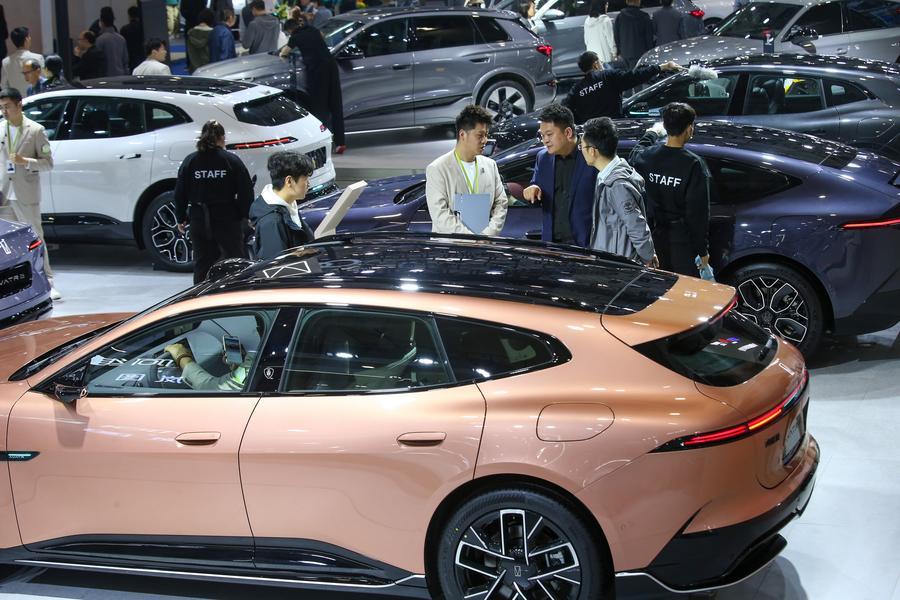
International collaboration remains a vital component of this ecosystem, despite rising geopolitical headwinds. The partnership between Volkswagen and Xpeng, alongside the integration of CATL batteries, demonstrates a "China-for-China" strategy where global OEMs leverage local agility to meet the high standards of the domestic market. For multinational players, the speed of technological iteration in China—often 20% to 30% faster than traditional European or North American cycles—makes the local supply chain an indispensable asset for global R&D. However, as Chinese exports expand, the focus is shifting toward "Compliance Capability." In a market where trade barriers are rising, the ability to meet localized data security regulations and environmental standards is becoming a core metric of operational success.
Ultimately, the 15th Five-Year Plan (2026-2030) provides the regulatory tailwinds needed for this transition into smart connected vehicles. As Chinese firms begin to "embed" themselves in local overseas economies through factory construction and job creation, they are evolving from simple exporters to integrated global stakeholders. The success of this global push will be measured by the reduction in logistical costs and the increase in market share within fuel-sensitive regions, where the operational efficiency of an EV—often delivering a 60% to 70% reduction in per-mile energy costs compared to internal combustion engines—continues to be a decisive factor for consumers. This evolution signifies that the future of mobility will be defined by those who control the intersection of energy density and computing power.
News source:https://peoplesdaily.pdnews.cn/china/er/30051888155